



India’s Hyperloop Experiment Begins
India has been positioning itself as a pioneer among developing nations when it comes to futuristic mobility. One of the boldest ideas on the table is the deployment of Hyperloop — a high-speed, low-friction tube transport system that promises to connect cities at near-supersonic speed While the world watches emerging prototypes in North America and Europe, India has taken real steps toward making India’s Hyperloop a reality, starting with the ambitious Mumbai–Pune Hyperloop corridor.
Mumbai–Pune Corridor: The Flagship Pilot Project

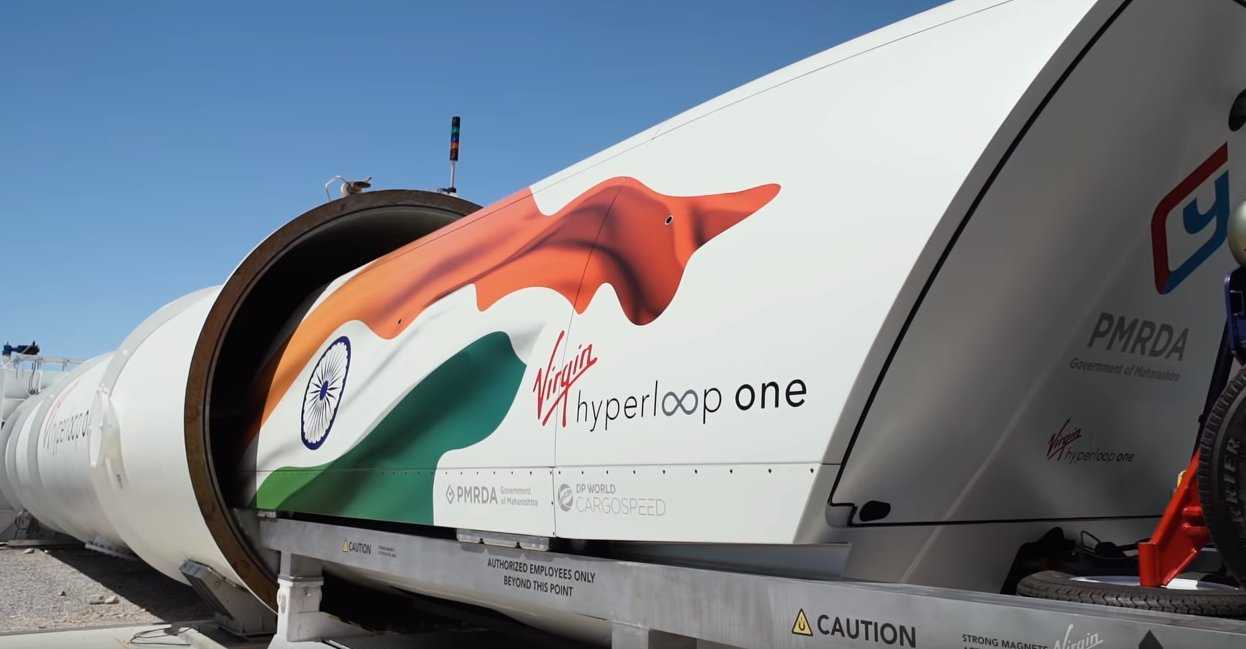
Announced in 2017 and gaining traction in 2019, the Mumbai–Pune Hyperloop proposal became the world’s first officially sanctioned Hyperloop infrastructure project by a government. Envisioned by Virgin Hyperloop One in collaboration with DP World and Maharashtra state authorities, the proposed corridor would reduce a 3-hour journey to just 25 minutes over a distance of 117.5 km.
Key features and status:
- Route: Between Bandra Kurla Complex (Mumbai) and Wakad (Pune)
- Estimated Speed: 1,000+ km/h
- Technology Partner: Virgin Hyperloop (formerly Hyperloop One)
- Investment: Estimated at over $10 billion USD
- Project Status: On hold post-2020 due to changes in state government priorities and COVID-19-related delays
While it received status as a public infrastructure project, concerns over its high cost, uncertain technology maturity, and land acquisition complexities led to re-evaluation.
Other Proposed Hyperloop Corridors in India
Beyond Mumbai–Pune, several other Indian cities have shown interest in Hyperloop systems. These include:
- Chennai–Bengaluru Corridor
- Proposed distance: ~345 km
- Potential travel time: ~30 minutes
- Stakeholder: Possible private-public collaboration under initial concept review
- Vijayawada–Amaravati Corridor
- Shorter route: ~40 km
- MoU signed with Hyperloop Transportation Technologies (HTT) in 2018
- Aimed to be a regional proof-of-concept
- Bengaluru Airport–City Hyperloop
- Route: Kempegowda International Airport to Bengaluru city
- Proposed to reduce airport commute from 2 hours to under 10 minutes
- Explored by Virgin Hyperloop and Karnataka government
These proposals reflect enthusiasm, but remain at early feasibility or MoU stages, with limited follow-through so far.
Public-Private Partnerships: Who Is Driving the Vision?
Hyperloop projects in India lean heavily on public-private partnerships (PPPs), where private tech innovators collaborate with state and central government bodies.
- Virgin Hyperloop and DP World led the Mumbai–Pune initiative, with DP World investing $500 million for Phase 1.
- State-level support has varied with political changes; Maharashtra’s government change in 2019 put the Mumbai–Pune project on hold.
- In Andhra Pradesh and Karnataka, PPPs are still in early-stage discussions.
The success of Hyperloop in India will depend on the stability of partnerships, clear policy frameworks, and long-term commitments across political tenures.
Land Acquisition and Economic Viability: The Hardest Challenges
Despite the promise of ultra-fast transport, Hyperloop faces two major hurdles:
- Land Acquisition:
- Elevated tube infrastructure demands large tracts of land.
- Requires precise curvature and right-of-way, making it inflexible in dense urban and rural areas.
- Legal, social, and environmental challenges mirror those of highway and rail expansion, but with stricter tolerances.
- Cost and ROI:
- Estimated costs per km are 3x to 5x higher than high-speed rail.
- Low passenger capacity (e.g., 28-30 per pod) raises concerns over throughput vs. cost.
- CVP (Cost-Volume-Profit) analysis shows alternative modes like metros and BRTs are more efficient per commuter served.

Conclusion: A Bold Vision in Need of Grounded Planning
India’s foray into Hyperloop reveals a bold intent to leapfrog into next-gen transport. But the road (or tube) ahead is fraught with complexity. From financial realism and political stability to land laws and public sentiment, Hyperloop’s success in India hinges not only on speed but on clear-headed policy, equity in mobility, and patient innovation. While the dream isn’t dead, it certainly needs careful steering.